I recently read an article in the London Review of Books by Tom Johnson entitled 'Supereffable'. This article itself covered a book centred around a manuscript Cotton Nero A. x, or as it's known colloquially as the Pearl Manuscript. Immediately I was fascinated by the descriptions of these mysterious and complex medieval poems and the never-ending search for meaning within these. I then picked up a copy of Chasing the Peal Manuscript by Arthur Bahr and was struck by all four of the untitled poems by unnamed authors. In particular around the complex search for deeper meaning within these texts and the complexities of the writing and their origins, including complex mathematical analyses of the line structure. All of this got me thinking about the way these scholars have approached this work and the links this has to the history of medieval pedagogy. As well as the practice of educational psychology and the search for meaning within the unknowability of the child's mind.
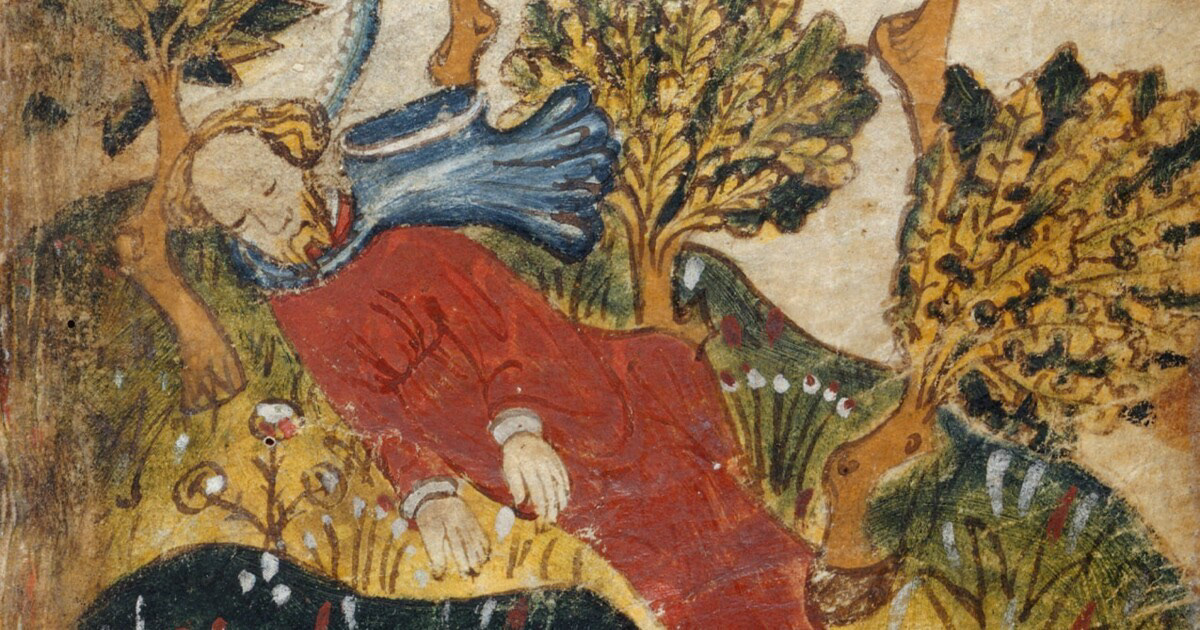
Within the Peal manuscript exists these four poems being; Pearl, Cleanness, Patience, and Sir Gawain and the Green Knight. All of these poems by nameless authors in the old dialect of the English West Midlands and focus upon moral instruction and transformation. The first poem, Pearl, centres around a narrator who is overwhelmed with grief for his young daughter. When the narrator visits the grave he is overcome by the smell of sweet flowers around the grave and begins to daydream and sees his daughter across a stream. She then scolds him for wanting to stay in this paradise as well as for grieving human life. The narrator continues to stand against the ideal that heavenly joy will compensate for his grief. When the narrator is finally driven to a point of insatiable desire to join the girl on the other side of the river he is pulled out of the dream and left with nothing but regret. Even on the surface this novel presents many themes around systemic paternal authority and a narrative around this being usurped. Even within the narrative there is a structure of the narrators own zone of proximal development in his understanding of the spiritual. He possesses the theological vocabulary and knowledge to comprehend her teacher, yet is unable to accept this due to the paternal relationship and his grief-driven desperation.
The second poem is titled Cleanness or Purity and centres of the virtues of moral and physical purity. This outlines God's hatred of the opposite, or the filth and calls down a divine anger in the form of a flood. Then comes Patience which explore the virtue of the title skill, patience. This utilises the Book of Jonah as it's central narrative where Jonah is swallowed by the whale after being thrown overboard for upsetting God. This upset originates from Jonah refusing to preach repentance in Ninevah. During this time in the whale Jonah repents and God then has the whale vomit Jonah on the shore. After emerging from the whale Jonah goes to Ninevah and preaches destruction and they immediately repent and God shows mercy, much to Jonah's annoyance. The story finishes with God creating a plant to provide shade for Jonah and then sending a worm to kill the plant. God then highlights the irony of mourning a plant but yet Jonah wills him to destroy an entire city.
Within the three remaining poems exists a complex understanding of instruction. Throughout Cleanness and Patience there are examples of negative consequences to the impure actions relying on both vicarious and observational learning. In essence this takes a behaviourist approach to the learning where the reader is expected to learn through the examples and consequences of others.
The final poem, Sir Gawain and the Green Knight, tells the story of the knights of Camelot. When at a feast a Green Knight rides into Camelot and challenges anyone to strike him with an axe on the promise that he returns the favour within a year. Gawain takes him up on this offer and beheads the Green Knight. The Green Knight then simply picks up his head and reminds Gawain of his commitment to meet him at the Green Chapel in a year. Gawain follows through on his promise stopping at a castle where he turns down the advances of the Lord's wife. When it comes time for his execution Gawain is unscathed by the three blows, representing the three days at the castle. However, Gawain despite surviving is horrified by his failure and returns in shame. This shame is not reflected by the other knights who joked with Gawain about his honour. Within this narrative their is the basic principles of trial, test and reflection which make up some of the key experiences of our learning building skills of metacognitive reflection. At the end the others laugh off this experience but Gawain exhibits an acknowledgement of his flaws and limitations and integrates these into his own understanding of self.
In total the four poems present a wide variety of pedagogical tools including: learning through dialogue (Pearl), learning through accumulate examples (Cleanness), learning through narrative identification (Patience), and learning through experiential trial (Gawain). Therefore, this presents an empirical approach to teaching beyond the origins of educational psychology and instead within medieval pedagogy.
Medieval education revolves primarily around memorisation and internalisation of core texts, often of religious origins. The level of education was largely influenced by social status, with those from well-off backgrounds receiving far greater levels of education, arguably much like today. Additionally a large amount of the education was centred around the church with most schools being ecclesiastical, with monastic and cathedral schools implemented to secure future clergy and monks. In this respect the Pearl manuscript poems follows closely the scholarly input at the time, centering it's discussions of the lessons around religion and traditional psalms. Most of these religious narratives use narratives to model ideal behaviours or demonstrate the challenges and compromises that exist when attempting to live within these narratives.
More directly the Pearl poem presents a question around voice and authority. When the young girl speaks she has a sophistication way beyond the level expected of a two year old. This has led to debate about whether this is the direct voice of the girl or whether this is the poet's theological imagination, making the child a puppet for the adult theological concerns. Within educational psychology there is a systemic problem of attempting to capture the views of the young people we work with. Vygotsky outlines how we rely on our own observations and interpretation of the young people we work with to draw any sort of conclusions. Therefore we can as adults place our own adult preoccupations and anxieties onto young people and the difficulties they may be facing. On the other hand, we may also be blind to the stressors of childhood of which we forget about as we grow and develop. So when the young girl within the Pearl narrative states "What you lost was but a rose, that flowered and failed as nature ordained it." It does not have the cadence or power of a young girl but instead that of a deep theologian and therefore we can only assume this scripture and meaning is prescribed upon her by the narrator.
This is what truly struck me within my understanding of the Pearl manuscript is the epistemological parallels to educational psychology and our attempts to understand the unknown. There are numerous discussions surrounding the Pearl manuscript in particular around the authors, the rhyming scheme and the mathematical structure of the works. These truly knowable questions spoke to my own understanding and drawn to educational psychology from an epistemological basis, that being the essential unknowability of the child's interior experience and cognitive processes. I think this is part of the draw for me when I consider my passion for the subject of educational psychology and the work I do it is often that intangible aspects and that unknowability that keeps the fascination going. Whilst we may never know truly what lies underneath the behaviours and beliefs of the young people we work with we continue to try to formulate and work with them to figure this out and support the development of not only their own identity but our interpretation of them.